What Rim Width Means and Why It Matters
Internal rim width versus external width
The number that matters most is internal rim width, not the outside measurement. Internal width is the distance between the inner bead hooks or sidewalls where the tire actually sits, and it has the biggest effect on tire shape.
External width can be useful for aerodynamics or frame clearance, but it does not tell the whole story.
For anyone comparing internal width options, internal width is the safer place to start because it directly affects how the tire mounts, supports load, and holds air.
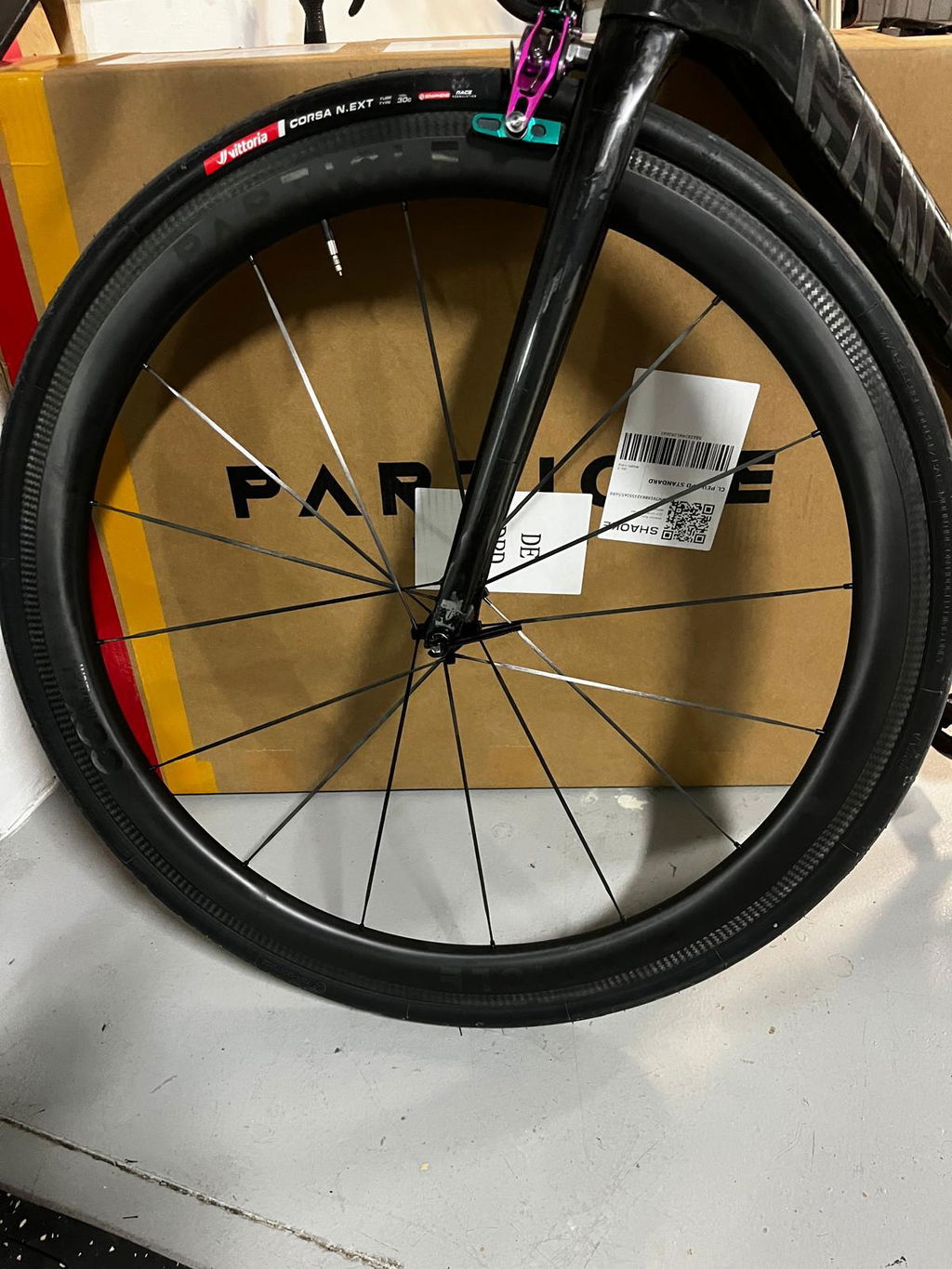
Particle leverages this by offering specialized internal widths tailored to specific tire sizes and uses: the CCX Series features a 19mm internal width for rim brake setups, all the RCX wheelsets utilizes a 21mm internal width structurally optimized for 28c tires, except for the RCX27 Hyperlight which offers a wider 24mm internal width.
For riders seeking maximum volume and stability, the GCX wheelsets all provide a wide 25mm internal width designed to optimize performance for 28-32c tires and gravel setups up to 71c.
To read more about why Particle chose these internal widths you can read this article.
How tire and rim shape interact
The same tire can look and behave very differently depending on the rim it sits on.
On narrow rims, the tire tends to take on more of an O-shape, with a rounder profile and more sidewall bulge.
On wider rims, the tire spreads out into a more U-shaped profile with a flatter crown and stronger shoulder support.
That shape change matters because it influences cornering feel, sidewall stability, and whether the setup feels planted or lively.
Tire and wheel compatibility is not just visual; it changes how the wheel behaves under load.
Wheels from Particle are built with a modern U-shaped design for these very reasons.
Real-world decision readers face
The real question is not “wide or narrow?” but “wide for what purpose?”
Wider rims can improve support, while narrower rims can save weight and preserve a softer feel.
Comfort, aerodynamics, and handling all move a little when rim width changes, and the best answer depends on tire size, tire pressure, and the terrain or surface involved.
Wider is not automatically better, especially if the tire is too small or the frame leaves little clearance.
A good setup matches the wheel to the rider’s actual use, not just a trend.

Wider Rims vs Narrow Rims: Core Performance Tradeoffs
Compare handling, cornering, and tire support
Wider rims can firm up the tire profile and reduce how much the sidewall squrm under hard cornering.
That gives a more predictable feel, especially when pushing into fast turns or braking while loaded.
Narrow rims can feel a bit more flexible and “lively,” which some riders like on less aggressive routes.
The tradeoff is simple: more support usually means more precision, while a narrower setup can feel softer and less locked in.
Tire construction and tire pressure matter too, because a stiff sidewall can mask some of the rim-width difference while a supple tire can exaggerate it.
Rolling resistance and contact patch myths
The contact patch gets a lot of attention, but a larger patch is not the entire story.
A rim's width can change the patch shape more than the total area, so the gain is often about better support and better load distribution rather than a dramatic increase in surface contact.
In a well-matched setup, that can improve rolling resistance because the tire deforms in a more controlled way. In a poor match, the opposite can happen.
The important takeaway is that efficiency comes from the whole tire and rim system working together, not from width alone.
Comfort, compliance, and ride quality
Rim widths also influence how easily a tire deforms over bumps.
A narrow rim may allow more sidewall movement and a rounder shape, which can feel forgiving on rough pavement or broken gravel.
A wider rim can feel more direct and less vague, but that firmness is not always the same as comfort.
Lower tire pressure can soften the ride, yet it is not a free win; too little pressure can increase squirm, rim strikes, or instability.
In practice, riders often balance rough-road compliance against a firmer, more precise road feel.
Weight and aerodynamics tradeoffs
Wider rims usually use more material, so they can weigh more than narrow rims.
That extra mass may be small on paper, but it can affect acceleration and climbing feel on lightweight builds. A
erodynamics adds another layer: a wider rim can work well only when it is matched to the tire width, because a bad rim-and-tire pairing can disrupt airflow.
This is why wide rims are not a universal upgrade. The fastest setup is often the one where internal width, tire width, and frame clearance are all aligned.
Are Wider Rims Better for Your Bike?
The Interplay of Rim Architecture and Wide Tire Dynamics
Wider rims can be better in specific performance setups, but they are not automatically the right choice for every car or bike.
The best answer depends on the tire, the load, and the intended use.
A wide rim may make a wide tire behave exactly as intended, while the same rim could be a poor match for a narrow tire.
So the question is less about which rim is superior and more about which internal width fits the setup and the driving or riding goal.
Wide Tires: Explaing when wider rims improve performance
When wide tires are used for track days, endurance riding, or aggressive cornering, extra rim support often improves stability.
The tire holds its shape better under lateral load, which can sharpen steering response and reduce vague sidewall flex.
Higher-speed or higher-load use tends to benefit most because stiffness and control matter more as forces build.
For racers, that can translate into more confidence, especially when paired with a tubeless compatible wheelset and the right tire pressure window.
When narrow rims still make sense
Narrow rims still make sense on older frames, with narrow tires, or in lightweight builds where saving grams matters more than maximizing support.
They can also be useful when the goal is comfort over rough surfaces, since a rounder tire profile may add a bit of compliance.
Some riders prefer the more forgiving feel of narrow rims because it can smooth the ride and reduce harshness.
That preference is valid, especially on long rides where all-day comfort matters more than ultimate cornering sharpness.
Practical decision factors readers can apply
The practical checklist starts with clearance, tire size, and speed goals.
Then consider road conditions, since rough pavement or gravel may reward a different setup than smooth tarmac.
A rider choosing carbon road wheels may prioritize aerodynamics and low rolling resistance, while someone looking at carbon gravel wheels may want more tire support and durability.
The safest rule is to match internal width to the riding purpose first and the marketing claim second.
How to Match Rim Width to Tire Size Safely
Compatibility ranges and manufacturer guidance
Compatibility ranges exist for a reason: they protect handling, bead security, and overall safety.
Tire sizing charts and manufacturer guidance show which rim width works best for a given tire, and those charts should be treated as the baseline, not a suggestion.
A wide tire does not fit every wide rim, and a narrow tire can look fine while still behaving poorly.
Before buying, check the recommended internal width range and make sure the setup falls inside it.
Effects of too-narrow rims
When a tire is mounted on a rim that is too narrow, the tread can look pinched and overly rounded.
That shape can reduce support in fast corners and make the tire feel less precise.
It can also change comfort and rolling resistance because the tire may deform more than intended.
On the road, that often shows up as a slightly vague feel when cornering hard or braking through turns.
Effects of too-wide rims
An overly wide rim can spread the tire too far and place extra stress on bead retention.
That becomes more sensitive with tubeless setups, where sealing and bead fit matter a lot.
In the worst cases, handling can feel harsh or unstable, and the tire may not sit securely enough for the conditions.
Fit risk is not just a technical issue; it becomes a real-world problem if the wheel cannot safely hold pressure or if the tire profile turns awkward.
Pressure and sidewall considerations
Tyre pressure often changes the final feel more than a rim's width alone.
A lower pressure can improve grip and comfort, but it also shifts load into the sidewalls and can expose weak pairing choices.
Stiff sidewalls can support a wider rim better, while softer constructions may feel best on a narrower or more moderate setup.
After any rim-width change, pressure should be checked again rather than copied from the old wheelset.
The same number can ride very differently on a new rim. The article "Understanding Road Bike Tires: Why Width Matters" can be read to deeper understand the nuance between the tire and wheel.
Common Disadvantages of a Wide Rim
Tradeoffs readers should expect
The biggest drawback is often weight, since wider rims usually need more material.
That extra mass can dull acceleration and make climbing feel a little less lively, especially on lighter builds.
There is nothing dramatic or alarming about that tradeoff, but it is real.
If the goal is a nimble wheelset, the added material deserves consideration rather than being dismissed as negligible.
Aero and Clearance Drawbacks
A wide rim can hurt airflow if it is paired with the wrong tire width, especially when the tire ends up wider than the rim is designed to support aerodynamically.
Older frames, tight fork crowns, and limited chainstay space can also reduce usable width. That creates frustration during setup because a wheel that looks ideal on paper may simply not fit cleanly.
Real-world clearance is often the factor that decides the build more than performance theory does.
Setup sensitivity and pressure range
Wide rims can make tire setup more sensitive to pressure changes, which means the margin between firm and harsh can feel narrower.
Poor pairing may create a ride that feels too stiff, too twitchy, or unstable at speed.
How to Choose the Best Rim Width for Your Needs
Riding style to guide the decision
Speed-focused builds usually favor a wider, well-matched setup, while comfort and lightweight priorities can point toward a narrower option.
Gravel and endurance use often benefit from broader support and better tire stability, especially with wider tires.
The key is to match internal width to terrain, tire size, and the feel you want from the bike.
Simple buying checklist
Before buying, check compatibility, clearance, tire width, and pressure range. Prioritize function over trends or marketing language, and remember that wider tires do not always need the widest rims.
A simple rule works best: choose the internal width that fits the job, then verify the tyre and rim combination is safe, efficient, and comfortable for the way it will actually be used.