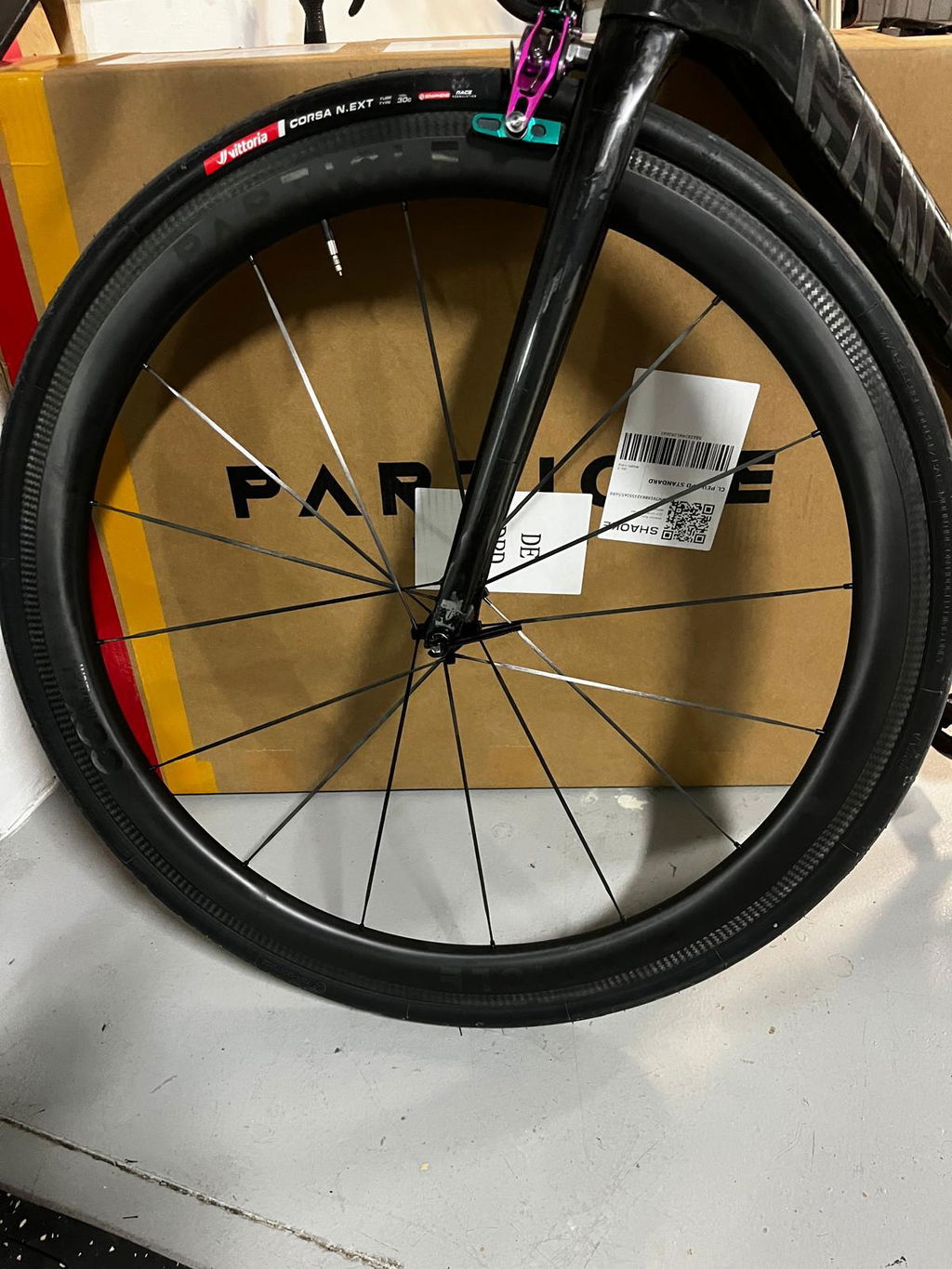
Carbon Spokes: Why They Break and How to Prevent It
Broken spokes rarely happen out of nowhere. More often, the wheel has been building stress through fatigue, poor tension balance, or an assembly problem that was easy to miss.
Carbon spokes can perform extremely well, but they're less forgiving of hidden defects than steel — often why cheap carbon wheels break spokes more than expected.
This guide covers what causes breakage, what signs matter, and how Particle builds its wheels to reduce repeat failures.

What Carbon Spokes Are and How They Work
Carbon spokes replace the traditional steel spoke with a stiff composite member designed to handle tension efficiently while saving weight.
That performance depends on the whole wheel being engineered around it — load paths, hub flange, and rim interface all matter.
Many early carbon spokes were bonded permanently into the wheel, so one break could mean rebuilding the whole wheel. Particle's 3rd and 4th generation spokes are mechanically secured instead, making them replaceable like a traditional steel spoke.
Main Reasons Carbon Spokes Break
Most failures fall into three buckets: fatigue, impact damage, or tension problems.
-
Fatigue develops slowly as a spoke bends and unloads over thousands of revolutions.
-
Impact damage comes from potholes, crashes, or debris.
-
Poor tension pushes some spokes to work too hard while others barely share the load.
Fatigue From Repeated Load Cycles
Fatigue often shows up as a gradual change before a full break: a subtle click, or a wheel that needs truing more often.
In comparative testing across spoke types, Particle found this is largely a steel-spoke problem — well-made carbon spokes don't lengthen and fatigue the same way, and last considerably longer under load.
Impact Damage and Side Hits
Potholes, crashes, and flying debris can damage a spoke in one event. Sometimes it snaps visibly; sometimes the damage hides in the hub end or nipple area. A wheel that took a hard hit should be inspected.
Poor Tension and Uneven Loading
Low or uneven tension is one of the fastest routes to repeat breakage. A loose spoke moves more under load and fatigues faster, and inconsistent tension means one side does too much work while the other goes slack.
Why Spoke Tension Matters So Much
Tension keeps the wheel structure preloaded and sharing force evenly. If it's too loose or badly matched, the wheel flexes more and puts extra stress on individual spokes and their nipple beds.
Particle's carbon spokes are held to a max tension of 130kgf, and the nipple bed is tested to withstand 300kgf of pull-through force without cracking — a wide margin over what the spoke ever produces.
Wheel Build Problems That Lead to Broken Spokes
Good parts don't guarantee a durable wheel if the assembly is sloppy. A fast-built wheel may look clean on day one and still develop problems after a few rides if the builder missed the details that keep load balanced — most often uneven tension or incomplete stress relief.
New spokes and nipples settle after the first rides, and skipping stress relief lets tension drift afterward.
Particle stress-relieves and re-trues every wheelset to within 0.25mm of runout before it ships, to catch this before the wheel reaches the rider.
Material Quality: Why Not All Carbon Spokes Perform the Same
Fibre selection, resin, and build care vary between brands, and two spokes that look similar can behave very differently once loaded.
After comparing carbon spokes across manufacturers, Particle settled on closed-flange hubs that remove any risk of a spoke popping out, and spokes mechanically secured against twisting so they stay in the most aerodynamic orientation.
The numbers back it up: Particle's carbon spokes hold more than 4000 newtons before failure, well above the 2600-3200 newtons that break typical steel spokes.
Particle doesn't manufacture its own rims, spokes, or hubs, and is open about that. Years sourcing from Xiamen factories inform which suppliers deliver on quality control, even though the specific suppliers stay confidential.
Every wheelset also survives at least twice the UCI Vertical Impact Test standard before it's approved for sale.
Are Carbon Spokes Worth It?
They're worth it for riders who want a lighter, stiffer, premium wheel and accept the trade-offs: better build quality, more inspection, and a higher price.
Pros use them for exactly this reason, especially in racing where every gram and watt matters — Particle sees this scrutiny directly as sponsor of three UCI pro cycling teams, including one at WorldTour level.
How to Prevent Broken Spokes
Inspect for rubbing, small noises, changes in true, and any spoke that feels different from the others. New wheels settle after the first rides, so a post-break-in tension check catches a moved nipple or small imbalance before it becomes a pattern.
Signs Your Wheel Needs Attention
Wobble, clicking, or a spoke that feels softer or tighter than the rest are early warnings worth acting on right away.
Avoid Riding a Damaged Wheel
One broken spoke changes the load on the rest of the wheel, which can push neighboring spokes into overload and turn a small issue into bent carbon rims or a bigger repair bill.
This is exactly the situation Particle's Lifetime Crash Replacement Policy exists for: if a wheel is damaged in a collision, impact, or accidental misuse, the original owner gets a replacement at 25% off for life, with per-part pricing if only part of the wheel needs replacing.

What to Look For Before Buying Carbon Wheels
Ask how the wheel was tensioned, whether stress relief was performed, and whether a single broken spoke can be replaced without rebuilding the whole wheel. Published testing and a real crash policy matter more than cosmetic details.
Riders who prioritize ruggedness, easy repair, or lower cost — or who ride rough roads often — would be wise to prioritize quality builds and good crash replacement policies over short term cost savings.
FAQ
Why do my spokes keep breaking?
Usually tension imbalance, a poor build, or impact damage. Check tension and wheel true first.
Are carbon spokes worth it for most riders?
For a lighter, stiffer premium wheel, yes. If easy repairs and cost matter more, steel is often the practical choice.
Can a broken carbon spoke be replaced without rebuilding the wheel?
Depends on the wheel. Particle's 3rd & 4th generation spokes are mechanically secured, so they're replaceable — ideally by a professional mechanic or a Particle service center partner.
Practical Takeaway for Riders
Carbon spokes rarely fail on their own; bad tension, weak builds, and hidden damage are what actually break them.
A wheel that's built well and checked after break-in can perform very well. If it starts breaking spokes, the fix begins with diagnosing the wheel — the thinking behind how Particle tests, builds, and supports its wheelsets, crash replacement included.