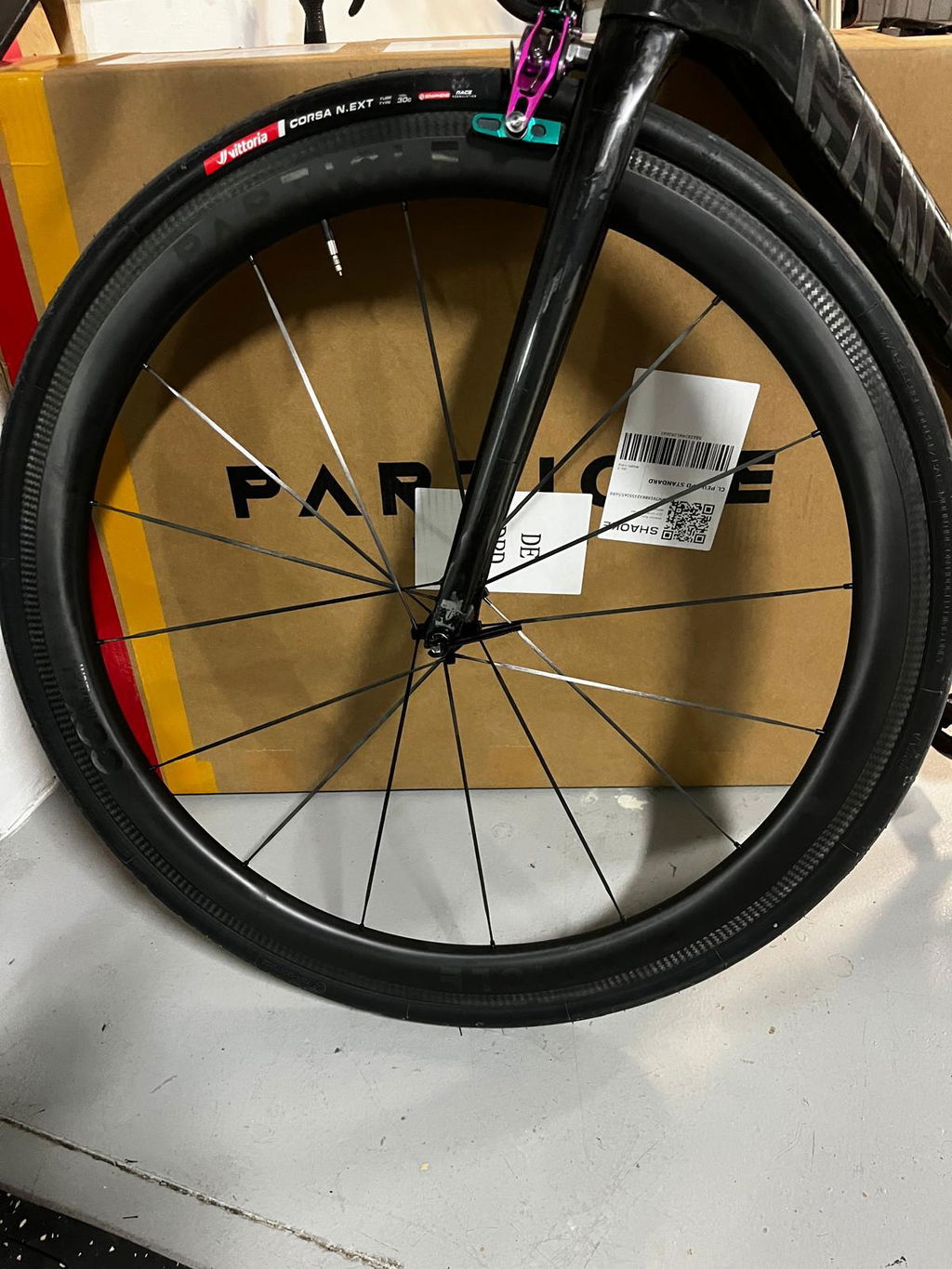
Impact Test Standard Guide for Carbon Wheels
The Science of Carbon Wheel Impact Testing
Wheel impact testing sits at the center of safer product design, especially for riders comparing carbon wheels that look similar on paper but behave very differently on the road, gravel, or trail.
A good impact test explains how a rim or wheelset is loaded, what failure looks like, and why one test result can be more useful than another depending on the use case.
For many riders, the most important aspect of a wheelset is not how light or stiff it is, but how strong it is.
While lab tests aren't 100% perfect simulators of real-world stress, they play an important role in providing measurable data in place of vague marketing promises.
To prevent injury from common scenarios—like hitting a pothole or obstacle at high speed—safe wheels should ideally be much stronger than the bare minimum required for racing.

Common Impact Test Standard Types
Most wheel standards use one of a few core patterns:
-
Direct-drop: Places a controlled weight onto the wheel or tire to simulate a sharp blow and show overall impact tolerance.
-
Single-side: Focuses on localized sidewall or bead-hook stress to understand local failure behavior.
-
Repeated-impact: Reveals fatigue and progressive damage, showing how a carbon wheelset weakens over time.
UCI Vertical Impact Testing & Particle Standards
UCI-related requirements are vital because they influence what can be approved for competition and how carbon wheelsets are validated.
However, certification and in-house development serve different goals: one proves compliance, while the other helps engineers push strength further.
At Particle, we believe the most important aspect of a wheelset is how strong it is—not just how light or stiff it is.
While we value the UCI Vertical Impact Test, a safe wheel should ideally be much stronger than the bare minimum needed to pass for a race wheel.
For this reason, we emphasize vertical impact resistance that exceeds these standards and offer conservative weight limits to prevent risk of injury.
The following are the impact strengths our different wheel series consistently survive:
| Wheel Series | Impact Strength (Joules) | Strength vs. UCI Minimum | Max System Weight Limit |
| RCX27 Hyperlight | 85 Joules | 2.13x UCI | 90kg |
| GCX Hyperlight | 100 Joules | 2.5x UCI | 100kg |
| RCX Ultralight | 100 Joules | 2.5x UCI | 100kg |
| GCX Ultralight | 100 Joules | 2.5x UCI | 100kg |
| RCX Light | 120 Joules | 3x UCI | 120kg |
| GCX Light | 120 Joules | 3x UCI | 120kg |
| RCX Team | 140 Joules | 3.5x UCI | 140kg |
| GCX Team | 140 Joules | 3.5x UCI | 140kg |
The key takeaway is that heavier wheels are the strongest and support higher rider weight limits, allowing riders to choose a wheelset based on their specific safety and durability needs rather than just the weight of the wheelset.

How Impact Tests Are Performed
A proper test setup includes a rigid fixture, a calibrated drop weight, and a supported wheel.
Technicians choose an impact height or mass combination to create target energy levels, striking at multiple positions because a wheel can be strong at one point (like the profile depth) and weaker at another (like spoke holes or joints).
After each strike, inspectors look for visible damage such as cracks, resin whitening, or air loss to determine if the structure has crossed a safety threshold.
First visible damage is often the key threshold because it marks where structural integrity begins to decline, even if the wheel still rolls.
Factors That Change Results
Several design details, such as rim width, depth, and layup schedule, influence how stress spreads through the structure.
Tire pressure also plays a role; a slightly softer tire can absorb more energy before the rim sees the full load.
Because of these variables, a rim that survives a brutal lab test might feel different in use—stiffness, compliance, and durability are always being balanced.
When to Retire a Wheel
The best impact standard depends on the discipline and rider risk; road racing and downhill riding do not demand the same failure tolerance.
Riders should always look for published test reports that explain the method and energy levels rather than vague marketing claims when concidering a new purchace.

Regardless of the test results, carbon rims should be retired if they show:
-
Cracks or soft spots.
-
Delamination or resin damage.
-
Deep brake-track wear or recurring air leaks.
After a heavy impact, always perform a close inspection of the spoke holes, sidewalls, and bead hooks, as hidden internal damage can be more dangerous than surface cosmetics.
Conclusion: Prioritizing Strength and Transparency
Ultimately, impact testing is about more than checking a box for certification; it is the foundation of rider safety and product reliability.
While many manufacturers prioritize minimal weight or maximum stiffness, the true value of a wheelset lies in its structural integrity under unpredictable real-world stresses.
Choosing Safety & Protecting Your Purchase
Opting for a wheelset engineered well beyond industry minimums—such as exceeding standard UCI thresholds—provides a crucial safety buffer when striking potholes or obstacles at speed.
Understanding how rim weight, impact energy ratings, and rider weight limits intersect allows you to choose durability over marginal weight savings.
Final Check
When comparing carbon wheelsets, demand transparency in published testing data—specifically exact energy levels (Joules) and pass criteria—over vague marketing claims.
When you choose a wheel built for your exact discipline and rider weight, you can trust your bike completely—leaving you free to enjoy the ride without that nagging thought of a wheel failure in the back of your mind.